Tuesday, October 20, 2009

When "Good-bye" Becomes a Prayer

"All the world's a stage,
And all the men and women merely players;
They have their exits and their entrances,
And one man in his time plays many parts,
His acts being seven ages."

William Shakespeare, "As You Like It," Act 2, scene 7

The eldest of our two adult daughters is moving out of the state today. Shakespeare's words capture my emotions, as I witness the first of many changes in our respective lives.

If you live long, you'll inevitably play a lot of roles.

I remember moving out of state for the first time as an adult child. I saw it all from the child's perspective, of course. Now, as a parent, I see a bit of what my own parents were seeing -- and feeling -- as we went about routine tasks, and silently counted-down to the moment when we said our good-byes.

Good-byes are hard, even when you've been looking forward to "launch time," such as the last day of an unpleasant job; or the first day of a great adventure. Good-byes are hard because saying "good-bye" is the prelude to a change for just about everyone in the "cast." Good-byes are hard because no change comes without uncertainty.

Lost in the modern usage of the word "good-bye," is its literal Middle English origin: "God be with you." Therein, for me, is the key to surviving every departure with its promises for success and its risks for failure: The invited presence of God.

Monday, September 28, 2009

When Getting By Isn't Good Enough

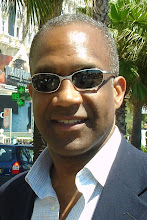
Just when we begin to think that a fat bank account, powerful friends, and smart lawyers are all it takes to tip the scales of Justice, the recent arrest of cinema darling Roman Polanski (pictured) reminds us that even in this life, while you may get-by, you don't always get-away.

Polanski, 76, who directed such critically acclaimed movies as "Chinatown" (1974), and "The Pianist" (2002), was arrested in Switzerland over the weekend at the request of law enforcement authorities in Los Angeles, California, who had a 31-year old warrant for Polanski's arrest. Polanski, convicted in 1977 of having sex with a 13-year old girl, fled California for Europe prior to his sentencing for the crime; and had successfully avoided countries that might extradite him to the United States -- until last weekend.

There is no excuse for any of Polanski's actions. Not his flight from justice. Not his crime against a 13-year old child.

Most difficult of all to swallow is the rising chorus of voices calling for his immediate absolution because (1) his crimes were committed such a long time ago; and (2) he's had such a remarkable career in the 30-plus years since his conviction, which ought to count for something -- like a "get out of jail free" card.

Trying to argue for accountability, fairness, justice, and the rule of law with the folks who are pulling for Polanski's immediate release is, I think, a futile endeavor. The sad part is this: There are a lot of people in our society who think as they do.

However, the encouraging part in this long, painful story is that there are times when even the rich and powerful are called to answer for their crimes, no matter how long they've managed to get-by.

Sunday, September 6, 2009

An Antidote for Narcissism

Recent news of a former professional acquaintance who -- much to the consternation of his colleagues -- was apparently scheming to stay-on in his current job beyond his normal tenure, reminded me of another all too human proclivity: Narcissism.

Narcissus, according to both Greek and Roman mythology, was a handsome but vain young man who spurned all who loved him, and upon seeing his reflection for the first time, fell in love with himself; the tragedy, of course, being that he could see but never touch the object of his affection.

Today, we usually regard persons as narcissistic if they are vain or seem to love themselves more than all others.

I must confess to having given in to narcissistic tendencies, as we see all too often with the leader who schemes for another term in office -- the constitution be damned; the aging athlete who fears life's prospects apart from adoring fans; or the senior military officer who cannot imagine life without the military, even as the military has decided that it will do just fine without him.

In the Book of Ecclesiastes, its writer says that there is a time and a purpose for everything under heaven. Some transitions -- such as job promotions, weddings, the birth of children, and new prospects in exciting places -- are greeted eagerly. Other transitions -- such as the inconveniences of aging, forced career changes, or even the departure of adult children to situations and locations that are strange and distant -- are greeted less eagerly. Yet, both kinds of transitions are a part of the "deal." The more narcissistic we are, the more we want to avoid the unpleasant bits, and keep the sweetest parts of the deal to ourselves.

In my former colleague's case, I suspect that he had developed special relationships and knowledge in his current assignment that would be of special value to his current and future bosses. The military is a particularly risky place to advance this line of reasoning in the pursuit of job longevity, since it is an article of faith in the better military forces of the world that all persons are replaceable. Or, as the late French General Charles de Gaulle said: "The cemeteries of the world are filled with indispensable men."

The Scriptures can help us avoid narcissism which, if the truth be told, irritates everyone except the person who is captivated by his or her own virtues, value, or abilities.

The Bible tells the follower of Jesus that he or she ought to look out for the interests of others as one looks out for one's own interests. (Philippians 2: 4) Many times, when we've stayed "in the chair" beyond our time, it robs someone coming along behind us of the opportunity to learn as we've learned because we're occupying the spot! Looking out for the interests of others means doing for others as we would have others to do for us -- and that includes stepping aside. (Matthew 7: 12)

In a less direct way -- through the lives of others -- the Bible also reminds us that what we sometimes regard as negative experiences are frequently the "training" we need for other "jobs" and "assignments" in one's life and career.

Consider the life of Moses, who had risen high in the ranks of Egyptian leadership before fleeing a murder accusation to the backside of the desert to tend sheep for 40 years which, at the time, must have seemed to Moses like the end of the end to a very promising career. As is often the case when our careful planning seems to go awry, God was just getting started. A wilderness apprenticeship was precisely the training Moses would need to lead God's little flock -- the Children of Israel -- in the wilderness following the Exodus.

The epilogue to the Exodus story is that Moses did not live to enter the Promised Land because the work the Lord had given Moses was finished. The Lord God chose the protege of Moses, Joshua, to lead the Children of Israel across the Jordan River into the Promised Land.

What if you and I aspired to be like Moses: A person who accepted both the sweet and the bitter of life with equal grace; who refused to sulk when reversed; and who easily yielded the stage to Joshua, a person whose interests he had guarded as carefully as his own?

If we dared to try, it would transform us for better; and it would gladden the heart of God.

Art Credit: Narcissus by Caravaggio

Friday, September 4, 2009

Discipleship's Simple Requirement: An Open Handed Approach to Life

The brush fires in California, and the accompanying reports of homeowners who refuse to evacuate at the risk of perishing in the flames and smoke, are an apt metaphor of Christian discipleship's simple requirement: Living with an open hand.

In Luke's Gospel, Jesus is recorded, after a brief discourse, as saying: "So then, none of you can be My disciple who does not give up all his own possessions." (Luke 14: 33, NASB)

The early 20th Century Christian missionary Oswald Chambers opined that this didn't mean that one could not be saved, as if from the peril of hell (which complements our original metaphor), but that he or she would not completely belong to Jesus. (Please click here for the referenced quotation.)

The point is that it is impossible to completely belong to Jesus if one is holding any of his own possessions. Discipleship, you see, is a zero-sum game. John the Baptist understood it as such: "He (Jesus) must increase, but I (John) must decrease." (John 3: 30, NASB, parenthetical notes are mine)

Holding one's own possessions is not the same as being a caretaker (steward) for the possessions of someone else. In life, we will have things, but the aspiring disciple of Jesus regards all that is under his or her stewardship as such, and not a personal possession.

One of the best illustrations of this occurred to a disciple named Clarence Jordan, who in 1942 began an experiment in racial reconciliation on a farm near Americus, Georgia, which drew the ire of some of its white neighbors. In the mid-1950s, Jordan's "experiment," Koinonia Farms, was the a frequent target of gunfire, bombings, arson, and the beating of its people.

In a letter to a friend, written in 1959, Jordan wrote: "I remember the night Harry Atkinson and I were on our way over to the roadside market after we had received word that it had been bombed and was burning. When we came over a hill we could see the fiery glow on the horizon, and this ignited a burning in my heart. I was scorched with anger, and I'm sure if I had known who had committed the act, there would have been considerable hatred in my heart. At that time I doubt that I could have distinguished between anger and hate.

"But as I had occasion to think, I realized that the hate was rooted in a consuming possessiveness. . . Later I had the same reaction when various ones, including myself and my children, were shot at. The so-and-sos were trying to take our lives from us!

"The solution to this soul-destroying condition came only upon the recognition that neither property nor lives were ours but God's. They never really had been ours in any sense of the word. We hadn't even 'given them back to Him' -- they were His all along. And if this was he way He wanted to spend His property and His people in order to accomplish His purposes, why should we pitch a tantrum?" ("Theology in Coveralls," Sojourners magazine, December 1979)

As Jordan notes, our possessiveness provokes all manner of negative emotions within us, and will eventually destroy the core of our being -- our soul.

I have always been in awe of people who live life with an open hand. Those rare folk who will work hard for something, but will also walk away from it or give it up because, I think, they have realized as John the Baptist did in Jesus' time; and Clarence Jordan has in ours, that it all belongs to God and it is God's to use (however peculiar or wasteful it may, at the time, seem to us) for His purposes.

Too many of us, for far too long have lived our life with a clenched hand. We grip what we have grasped. We are loathe to let go; and heaven help anyone who dare take what we hold from us. Yet, the truth of the matter is this: While no one may not be able to take what you have, neither can someone give you something better.

To give away all that one possesses is the first step toward gaining the gifts of God!

Wednesday, September 2, 2009

Magazine Review: Mapping the Seven Deadly Sins

The latest issue of "Wired" magazine maps the Seven Deadly Sins. (Click here to see the article and accompanying maps.)

If you've never read this magazine, it is worth your time. And it's not just a magazine for geeks (although persons with less than perfect eyesight will need reading glasses). As you might have assumed, you can also find "Wired" on the Web.

I began subscribing to this magazine because I thought it would help me to better understand the technology that has become a part -- for better or worse -- of interpersonal communication. Preaching, if nothing else, is interpersonal communication on a large scale; and I thought that a better understanding of the communication technologies would help me to be a better preacher.

So, if you've wanted to learn about Craigslist, how to throw a knife, or discover what's really in a Slim Jim snack, "Wired" is your ticket. And, you'll also see where the big "sinners" live!

Saturday, August 29, 2009

The Runner, the Motorist, and the Turtle

The story below actually happened to my wife Jay, and is re-told with her permission. (It's not like the story is copyrighted; or that my wife would sue me, or something, if I didn't obtain her permission. But if you like this story, and you know my wife, please tell her so.)

A few days ago, my wife was running through our neighborhood when she saw a box turtle in the street.

The turtle was half-way across the street as she passed.

Approaching, from the opposite direction, was a car that attracted my wife's attention because, as it approached, it began to slow. Then, several yards beyond my wife, the car stopped.

As she turned, she noticed that the car had stopped at the turtle. A man emerged from the driver's side. He picked-up the turtle, and headed to the grass beyond the curb -- limping.

Friday, August 21, 2009

A Funeral Homily for an Old Soldier

MSGT Freddie Lee Mahone, U. S. Army (Retired) died on August 12. He was 82 years old. The words below are my funeral sermon for my friend, who was also a friend to many others in his neighborhood, his extended family, and the U. S. Naval Academy Chapel community.


He was buried, with military honors, in the Maryland Veterans Cemetery, Crownsville.


Scripture: Ecclesiastes 12


This passage from the Old Testament book of Ecclesiastes may seem to be a strange text for a funeral sermon – particularly for a man who had lived for more than eight decades; a man who had fought in two wars; a man who had served our nation for 30 years as a soldier, and 30 additional years as a federal civilian employee.


However, the truth about the funeral sermon is that it is not for the person who has gone – as the folks in Freddy’s native Georgia might say – “from labor to reward.” It is for those of us who remain.


I first met Freddy – who insisted that I call him by his first name – one Sunday morning before services in the upstairs chapel. He was an usher and a cross-bearer in the procession. (He was one of the gentlemen who comprised our usher corps, and not all of them could easily carry the heavy processional cross the 80 yards or so from the Chapel entrance to the altar!)


But I got to know Freddy as I encountered him – at 70-plus years – running the perimeter of the Naval Academy grounds. Occasionally, we would run together.


I learned that he was devoted to his wife, who at the time was seriously ill. He had great affection for the Naval Academy, despite being an Army guy. He loved this Chapel community. This was his church!


He had seen a lot. He had done a lot. And he knew a lot, although he would be the last person to let-on, because he was a man of great humility.


The resonance of the final chapter of Ecclesiastes for we who remain is in the preacher’s admonition to remember our Creator while we are young.


You may be 100 years old, but you are younger today than you will be tomorrow.


Today: Are you living for God?


Today: Have you time for God?


Today: Are unalterably committed to the things that are always right; the things that never deceive; the things that transcend time and eternity?


The words of Ecclesiastes are as relevant today to persons who are “young at heart” as they were when first written 3,000 years ago to people who were “young in fact.” To those individuals – regardless of chronological age – for whom tomorrow is bright; and for whom life is as full and varied as a Sunday buffet, the preacher has three words: Remember your Creator!


Scripture tells us that there are three basic tactics employed by the devil to help us to forget God: (1) The lust of the flesh: What feels good to our senses; (2) The lust of the eyes: What looks good, either literally or figuratively; and (3) The pride of life: The sense that life is good, and that, for you, it always will be good.


Yet, the preacher says that if we live long enough, our life will change – and at the end of life, we each must stand before God.


When that day comes, and we each stand before God, what will be in our memory? Recollections of treasures reserved for us; or the reality of treasures laid up in heaven, where moth and rust cannot corrupt; and where thieves cannot break through and steal?


When that day comes, and we each stand before God, what will be in our memory? Recollections of our hobbies, pastimes, and occupations; or the assurance that God has remembered the visits to those whom others seem to have forgotten: The sick, the shut-in, the prisoner, and the elderly?


When that day comes, and we each stand before God, what will be in our memory? Will it be our Creator? Will we recognize Him as our Father? Will he recognize us as His children?


Our Hope – Jesus Christ – came to this earth; lived, was crucified, buried and resurrected, that you and I might become the Children of God by believing in Him. If the Spirit of God is speaking to you; urging you to remember your Creator, will you now come to Him?


Jesus says this: “Behold, I stand at the door and knock. If anyone hears my voice and opens the door, I will come into him and eat with him, and he with me.” (Revelation 3: 20) There is no better time than now. There is no better place than here.


As a disciple of Jesus, this was Freddie’s hope. It is my hope, too.


I envision that when I see Freddie in heaven, we will, again, go for a run; but not before we have added our voices to the heavenly assembly, gathered to remember in eternity our Creator, Redeemer, Lord, and God: “Holy, Holy, Holy! Amen!”